
Lawrence is a short drive south of Noblesville, where I started this business in 2013, and the masonry there is a lot like what we work on in Fishers and up in Cicero. We see older brick ranches with mortar that's gone soft, block foundations with stair-step cracks, and front steps that have settled away from the door. On newer lots, people usually call about a retaining wall, a walkway or a better driveway. On older houses, the job usually means matching worn brick and soft mortar. On newer lots, it means planning drainage on fill dirt that may still be settling.
Winter is what's hardest on masonry here. The Indianapolis area averages about 25 and a half inches of snow a year, and between the melting, the refreezing and the road salt, water works into every open joint and under every step, so most repairs here start with finding where the water gets in.
What sets the price and the start date
The price follows how much of the wall is actually failing and what's behind it, because a crack from a settling foundation is a bigger job than worn mortar alone. Height and access count too, since a two-story chimney needs scaffolding that a front stoop doesn't, and matching old brick or mortar color can take time to track down. The schedule turns on the weather, because fresh mortar shouldn't freeze before it sets, and on whether the city wants a permit first. When I come out, I'll tell you what I think is causing the trouble and put your job in writing.
What we fix now and what can wait
Most calls start with something you can see, like sandy grit under a brick joint, a front step pulling away from the house or a damp spot inside by the chimney. I'd rather spend the visit finding out why it happened, because new mortar over a joint that keeps getting wet usually lets go again. Some of what I find is cosmetic and can wait a season or two, and I'll tell you so. A leaning wall or a cracked concrete cap on the chimney gets worse with every freeze, so those go first.
Planning a new wall, walk or driveway
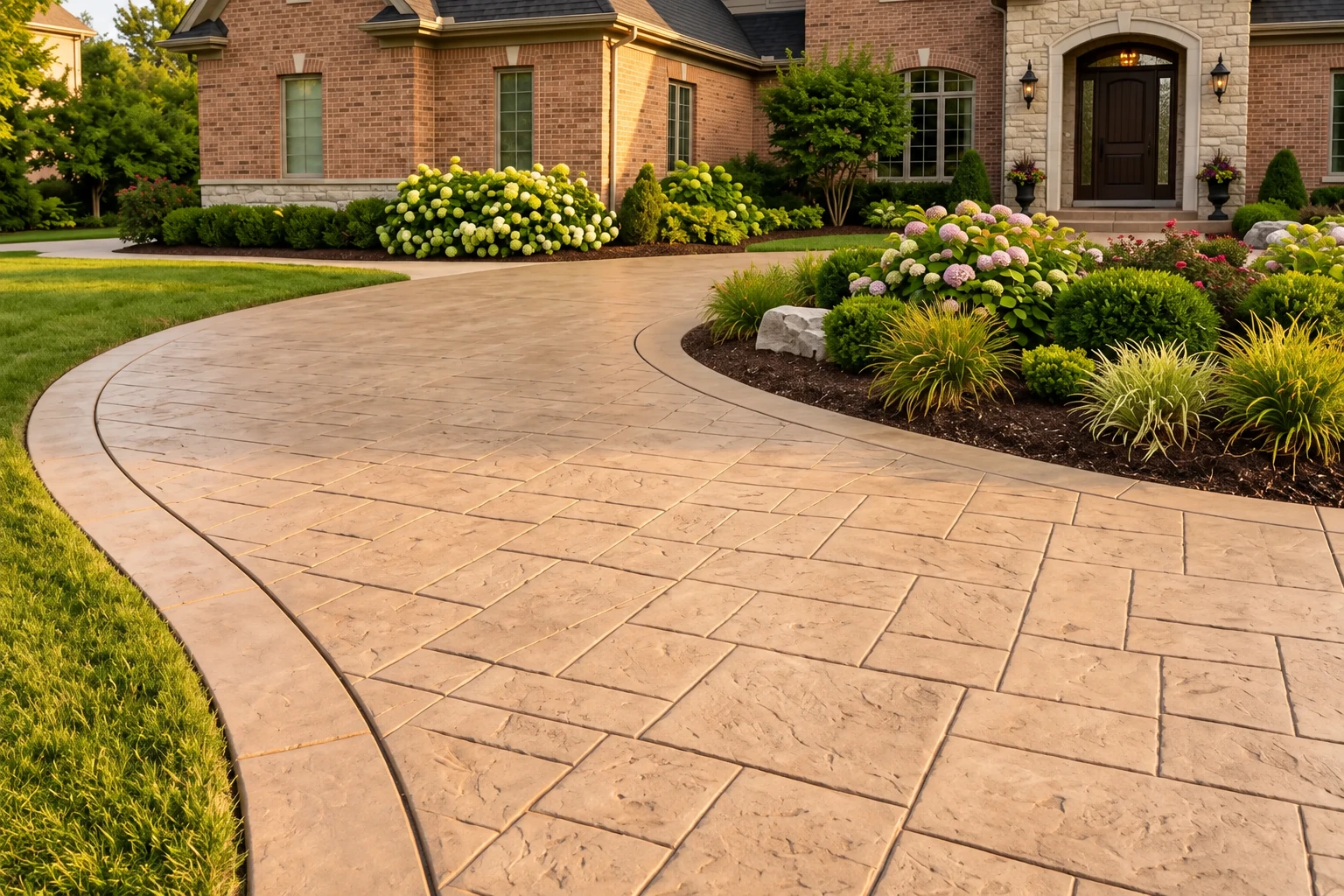
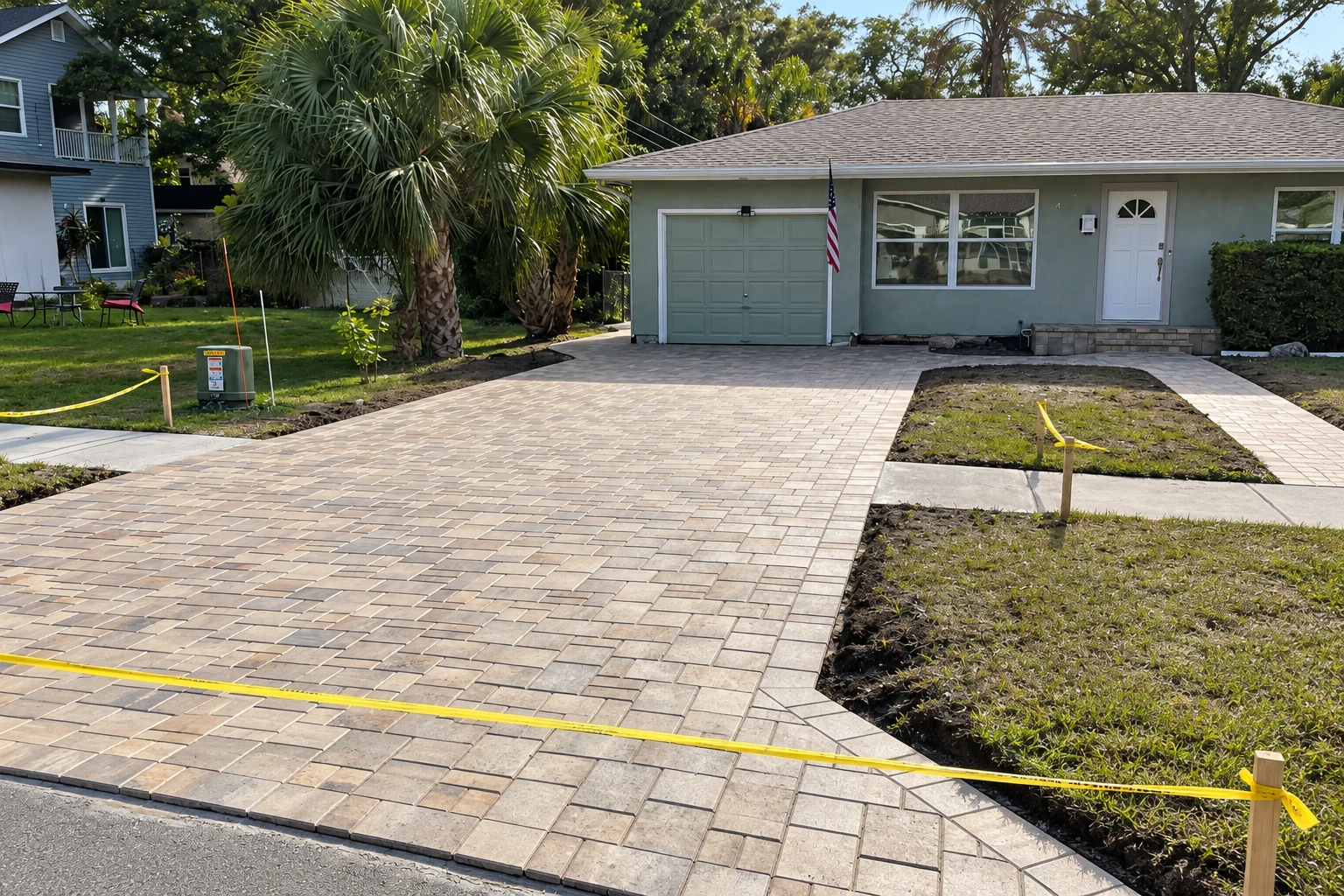
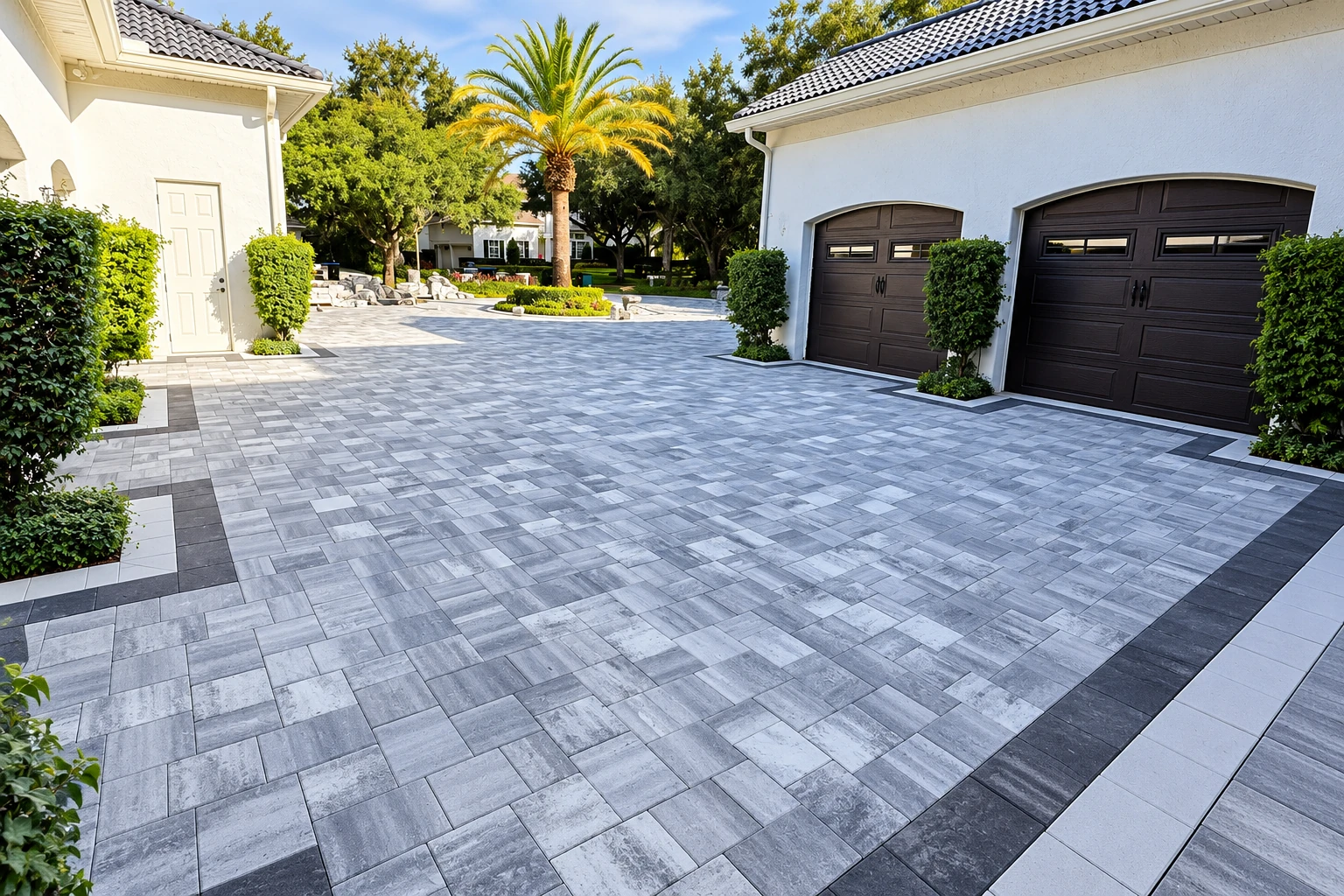
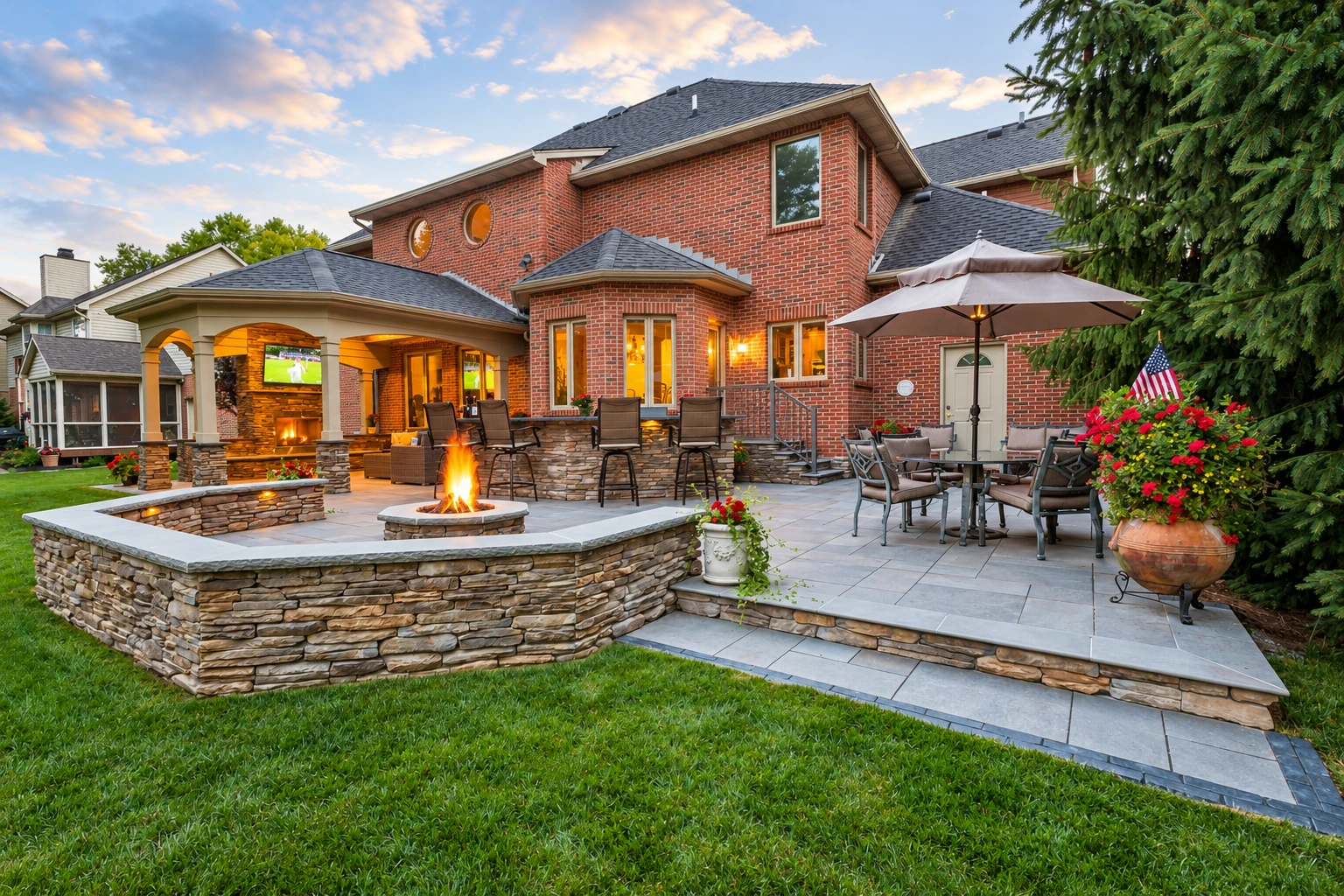
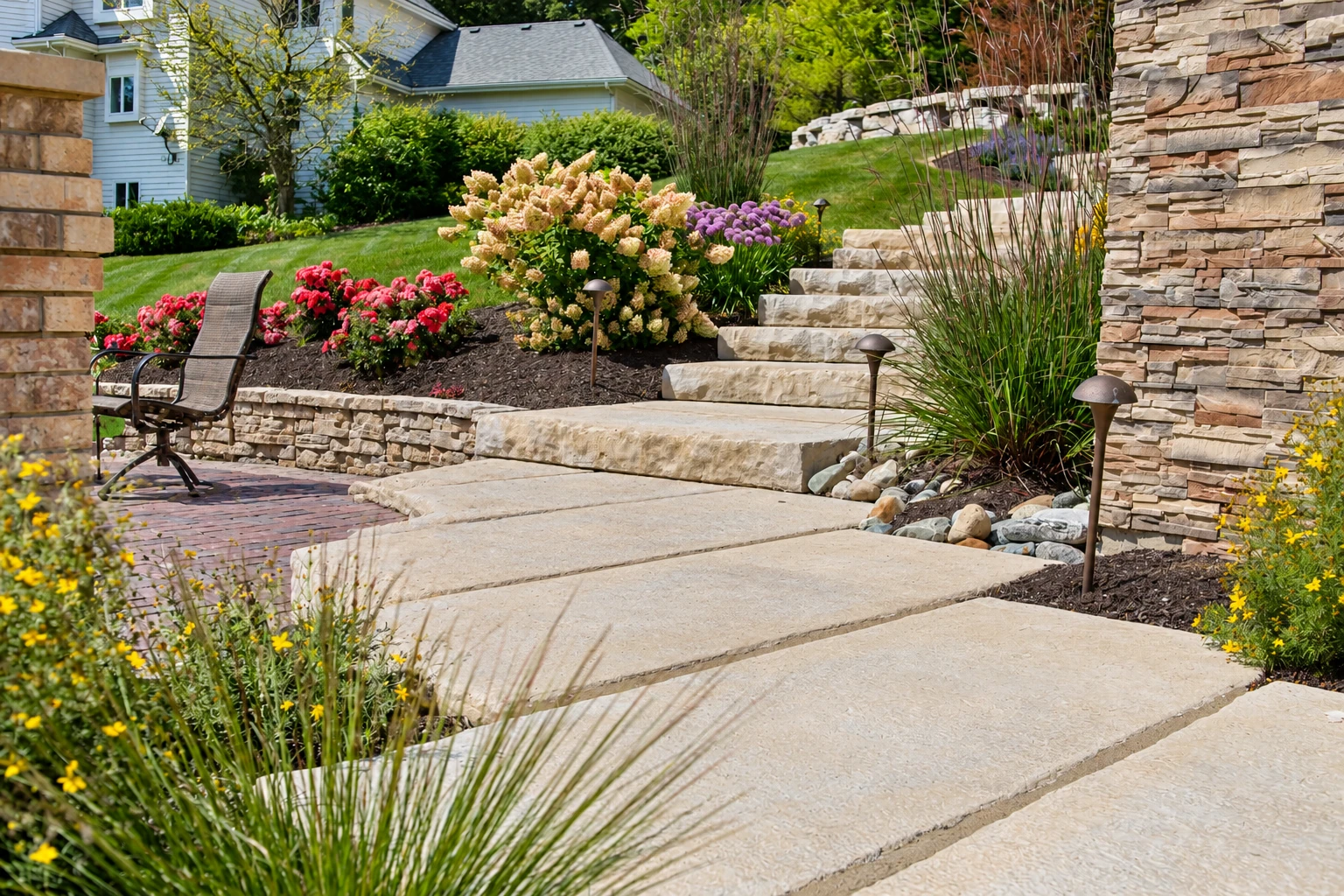
With new work, most of the decisions happen in the ground before any brick or stone shows. A walkway or driveway pavers are only as good as the packed gravel under them and the slope that carries water away from your house, so I look at where the downspouts empty and where the yard holds water. A retaining wall needs drainage behind it, or the wet soil pushes on it year after year. We'll also need a way in for gravel and pavers, so tell me about gates, fences, sprinkler heads and where you park. Our crew cleans up the site before we leave.