


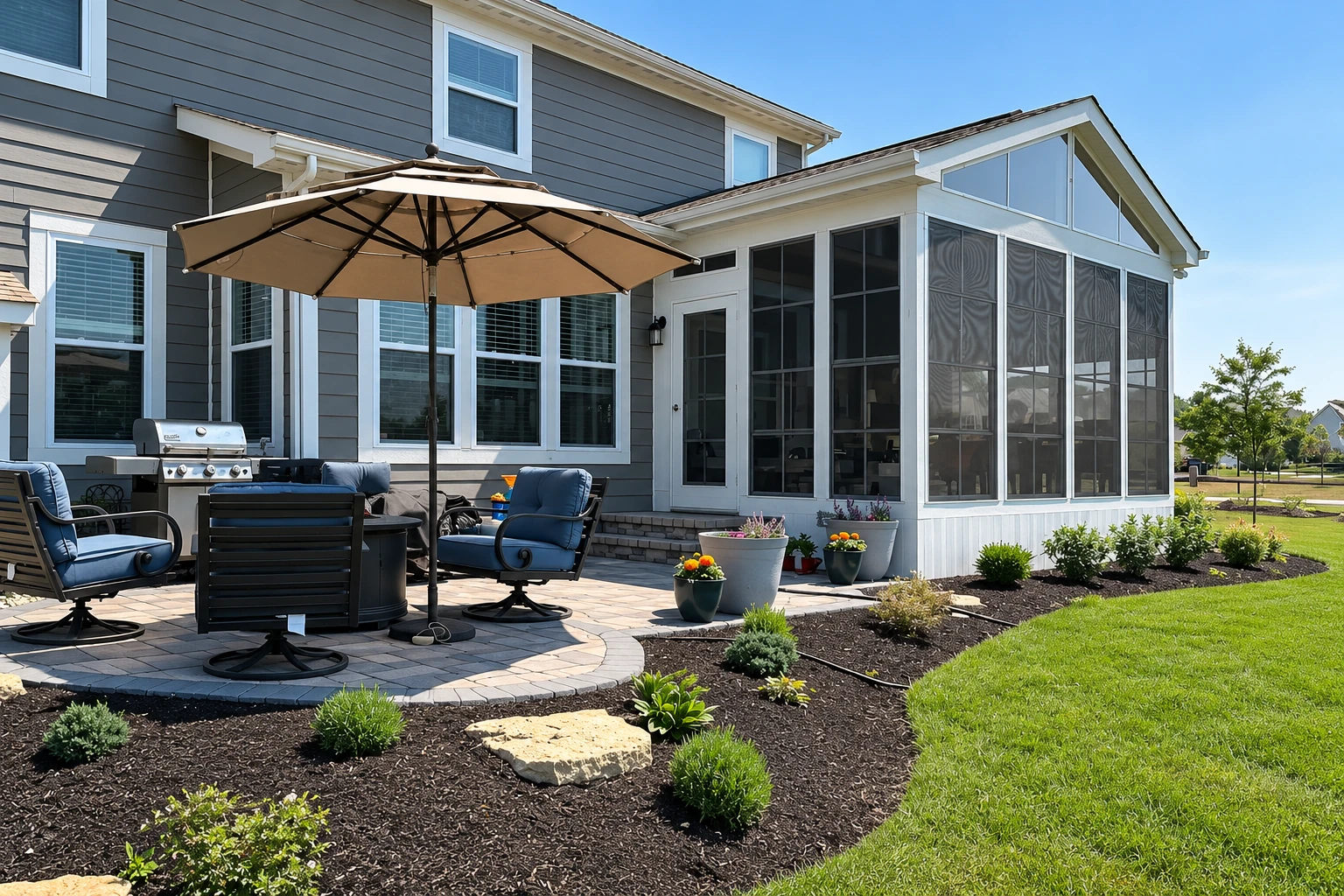
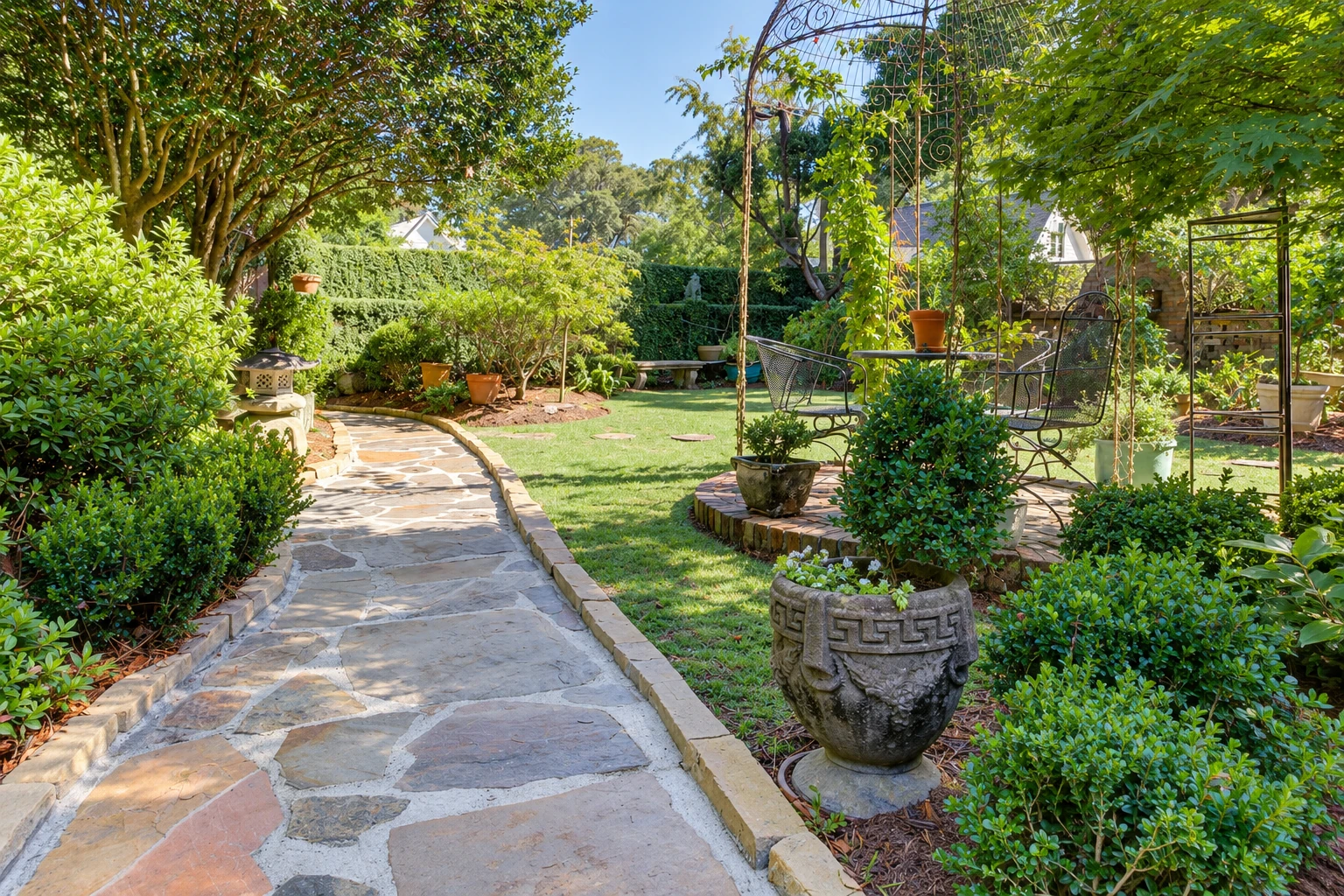
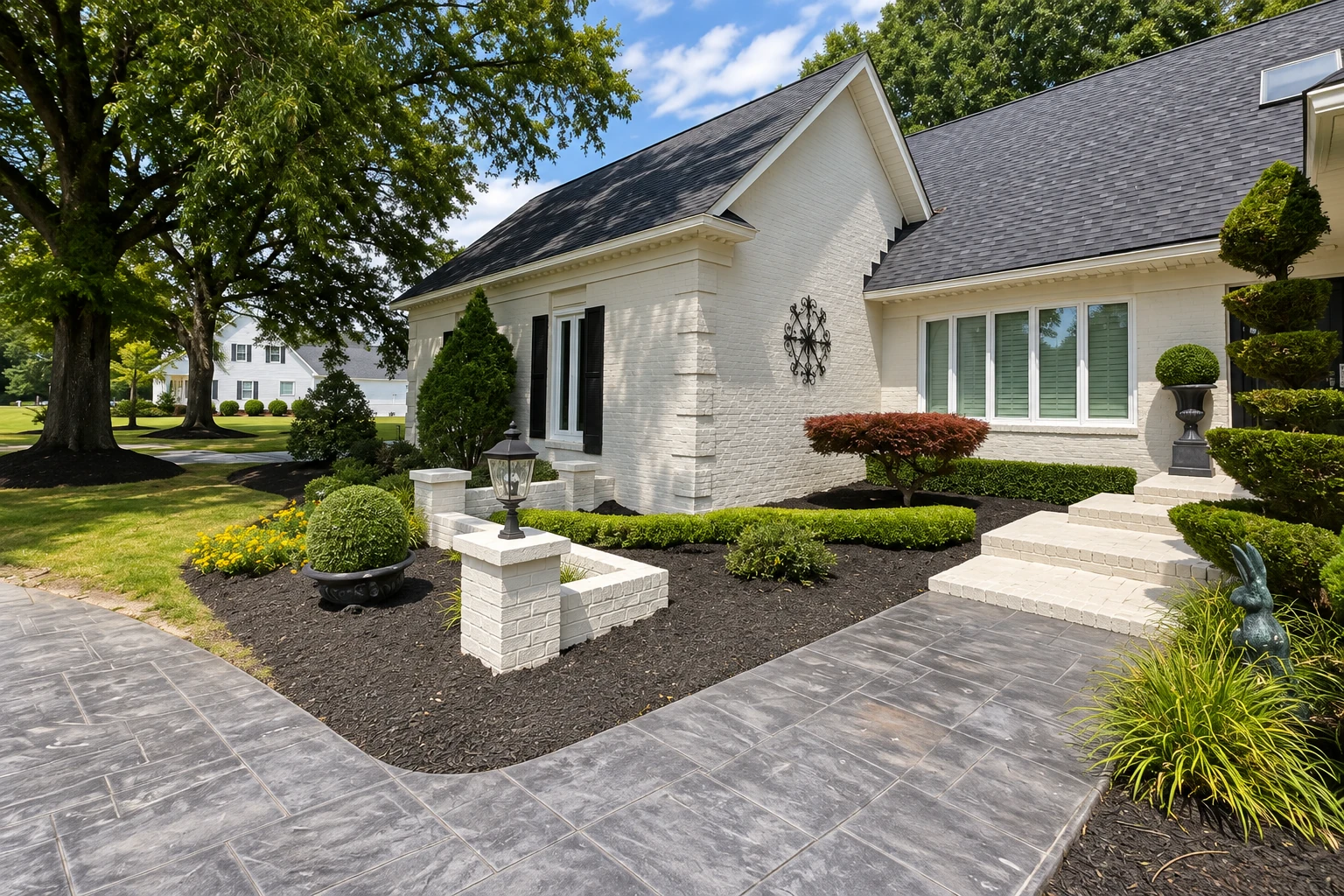
McCordsville is a fast-growing suburb in the northwest corner of Hancock County, right up against Fishers and Lawrence, and it's an easy drive from our base in Noblesville. The calls we get there mostly come from newer neighborhoods. People call about cracked foundation walls and brick or stone fronts with a few failing joints. They also want a retaining wall, walkway or paver driveway added to a yard that came with the house. We do the same work across the cities around Noblesville, out as far as Whitestown.
Newer houses settle in their first years as the ground under and around them packs down, so a crack on a young house is usually telling you about the soil or the water, not the mortar. That's why I start by asking why it cracked before we decide what to fix.
Permits come before the first shovel
McCordsville's Building Commissioner issues building permits, and the local code doesn't allow construction to start until it's covered by a valid permit, so the paperwork comes before the digging. Before we set a start date, I check with the Town of McCordsville or the county office for your address on what your job calls for, and when a permit's needed we take care of the application. If your job needs one, the application includes a plot plan drawn to scale. That's only skipped when all the work happens inside the existing house, and even then the permit still applies.
What moves the price and the schedule
Price comes down to how much wall or ground is involved, what's causing the trouble and how much has to come out before we can build it back. Matching existing brick or stone, digging a proper base and tight access between houses add time and material. A crack that traces back to the footing under the wall is a bigger job than a few loose joints. The schedule turns on the permit step, our crew's calendar and sometimes what we find once a wall is open. At the estimate I look at the wall or the ground, tell you what I think is causing it and put the work in writing, and if it can wait, I'll say so.
Foundations and walls on newer lots
A lot of the McCordsville houses we see sit on lots where the dirt around the foundation was backfilled during construction. That soil can keep settling for a good while and tip water back toward the house. That's often what's behind a stair-step crack in a block wall or a patio pulling away from the house, so we look at the slope of the yard and the downspouts before we touch the mortar. If you're adding on and need new block below ground, our foundation block wall installation page covers that work. Before we arrive, it helps to flag sprinkler lines and pet fences, and we'll plan where the mixer and pallets sit so you can still get in and out.